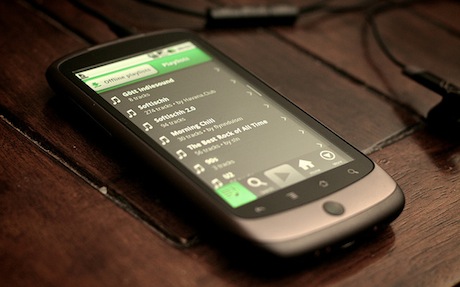
"Spotify Paid Lady Gaga $167 For 1,000,000 Plays"
This headline showed the “dark side” of music streaming start up, Spotify. Critics were in awe about how little artists were being paid for their hard work. Despite the short lived pleas from Spotify that they paid more per play people focused on this number, as if it was a bad thing.
Paying an artist less than 1p per play sounds like a raw deal, until you remember Spotify is a marketing platform. Spotify is designed as a service for people to listen to their favourite tracks cheaply. Why does this benefit the artist? Because if you love their music, you’ll go to the show, get the t-shirt and support the live scene.
I am aware not everyone goes to see live music – that’s not for everyone. Additionally some artists can’t actually sing. Surely this free market model means the ones with little to no talent get paid less (something I am all for).
According to my Last.fm account I listened to Lady Gaga a couple of hundred times in 2011. In the traditional music model my plays would have cost me £10 for the CD that I would have had to burn to my computer, then onto my iPhone. With Spotify I paid £10 per month and was able to listen to her tracks with much ease and (in the case of her more recent release) before the hard copy hit the store.
When you think of Spotify as a marketing tool the critics of low royalty amounts to artists’ flies out the window. They should be happy with any money – maybe that’s a step too far. But you see, Spotify is providing them with a platform to get their music to the widest possible audience.
The ability to preview tracks before deciding to spend £10+ on a CD is invaluable. I can’t stand it when I used to purchase an album based on the singles they released only to be disappointed by every other track on the release – who hasn’t had this feeling?
With Spotify you can chose to buy an album based on all the tracks. Which is a good thing. All killer, no filler should be the result. And if you only like one track, you only have to buy that one. Spotify beats iTunes on this front. The current market leader only offers 90-second previews of tracks...step it up Apple.
If you have to moan about anything to do with Spotify I guess would have to be a combination of customisation / discover and navigation.
With the latest release you can browse your friends playlists and even subscribe to them, which is cool, but it’s not really helping me discover new artists. Why can’t we get a custom “What’s New” screen based on my previous listening habits, not just what’s been released in general?
Navigation on the iPhone (and desktop) is a pain in the bum. You can make playlists, which are easy enough to scroll through. But it’s amazingly more simple to be able to filter who you want to listen to by artist, album or even genre.
In 2012 I’d like to see this platform become more dynamic and social. You can share tracks and browse friends playlists but you’ve got so much more data to play with. Why not tell me when the artists I listen to are touring? A revenue stream for the company could be to become an affiliate of SeeTickets.
I think the move into apps is a great step forward. And will make the platform the leader in the music market for distributing tracks and creating a fair revenue model in the process.
Photo (cc) Johan Larsson
10 January 2012 by Simon Caine

Simon is a social media manager by day & a stand-up comedian by night. You can also Follow him on Twitter.
Bloggers
- Alex Chapman (8)
- Alex Gillett (1)
- Alex Sass (3)
- Benjamin Ellis (17)
- Benn Achilleas (7)
- Bex Clarke (8)
- Bootlaw (1)
- Borz Farahani (1)
- Chinwag News (100)
- Chinwag Team (33)
- Chris Bradley (1)
- Ciaran (1)
- Colin O'Malley (1)
- Danielle Dalkie (4)
- Danny Bluestone (2)
- Dave Williams (2)
- David Rowden (1)
- Deirdre Molloy (16)
- Diana Gray (1)
- Diana Yeboah (3)
- Dominic Campbell (1)
- Emily Fisher (5)
- Fiona Du Vivier (1)
- Francesca Heath (38)
- Graeme Harvey (1)
- Guy Rigby (1)
- Jamie Riddell (12)
- John Horsley (5)
- Jonathan Wardle (1)
- Julia Eilon (2)
- Julian Ranger (1)
- Kay Hammond (2)
- Lauren Cotton (117)
- Lauren Macready (11)
- Luke Walker (1)
- Mellissa Norman (2)
- Nicky Swain (6)
- Nikki Barton (5)
- Phil Haslehurst (1)
- Richard Woods (4)
- Sam Michel (342)
- Sam Turner (1)
- Sarbjit Bakhshi (2)
- Scott Allison (1)
- Scott Meyer (3)
- Shannon Lee (2)
- Sherrod Dine (1)
- Simon Caine (16)
- Simon John (1)
- Suzanne Morrow (51)
- Tim Ash (1)
- Tim Butler (1)
- Tom Smith (1)
Archive
- May 2012 (12)
- April 2012 (18)
- March 2012 (10)
- February 2012 (23)
- January 2012 (13)
- December 2011 (10)
Chinwag on Twitter
Chinwag Newsletter
Updated Chinwag Profiles
- Dave Williams - BLiNQ Media
- Liam Moore - Liam Moore
- Charlie Newport - fish in a bottle
- UX Utsav - IAbox Limited - UX Utsav
- Beyond - http://www.bynd.com


Comments
Why do people not see this?
The royalties of spotify aren't bad at all, especially when you know that the lifetime of a song has been expanded a lot by streaming services like Spotify. Even though the revenue per play may seem low, when people start using Spotify as their main media player and create their playlists in it, the number of plays quickly add up, especially because old songs will keep selling as well.
You also can't forget that most people nowadays don't even spend 10€ each year for their music, as they just downloaded it illegally. With Spotify record labels regain the pirates as paying consumers (even if it's ad-supported) of which the subscribed ones even spend 120€ each year on music.
If you do the math, you can't help but notice that there should be a lot more financial gain for the artists when streaming services like Spotify become even more popular.
Of the £10 (or less) you pay for a CD...
Most does not go to the performers and/or writers.
Have you actually used Spotify!?
> but it’s not really helping me discover new artists.
Per Tom Hicks there are a load of new apps to help you discover new music - moodagent, soundrop, sharemyplaylists..
But even before that release there was (and continues to be) artist radio which generates playlists from related artists...
How much did the label get for those 1,000,000 plays?
...that's just as important a question.
I'm sure they do alright out of it.
spotify
exactly its a discovery medium its up to us managers, publishers and other rights managers to be creative and evolve our business model. technology will lead and we need to be thinking ahead. the industry has acted like king canute tbh and should have been developing new models 10 years ago
The idea that the reasons for
The idea that the reasons for or against Spotify are about what it 'is' (marketing platform or 360 music listening service) are somewhat moot - it is what it is, and people use it in different ways. Some use it for discovery (I know quite a few people, most of them over 35, who use Spotify to audition stuff before buying it on iTunes/Amazon), some use it to listen nostalgically, and it largely becomes a more useful, organised version of Youtube for hearing cheese from the 80s once or twice.
Others I know have given up buying CDs or paying for downloads since getting on Spotify, in the slightly naive assumption that a large portion of the £120 a year they pay goes back to the artists... Here it's the listener whose economic aspirations have been short-changed. They like the service, but also want to support the artists. That very little of the money they pay goes to the artists is often deeply problematic when the find out. I know a significant number of people who canceled their accounts for that very reason.
But for me as a musician, there's a whole other angle on this - if Spotify was indeed free, if it was a community service, I'd like it better than the version where a large stake in it is owned by the Major Labels, who get paid a dividend, most likely get a better per-play rate for their artists and get a slice of the ad revenue too... I say 'likely' because we don't know, Spotify are notoriously quiet on detail about payments.
So, it's not because I don't make enough from it, but because it doesn't meet any kind of 'fair trade' target that I pulled my music off spotify. I may end up with fewer listeners as a result, but my motivation for making music and making it available is not to 'maximise my potential audience' or some other marketing BS speak. It's to keep making the music that matters to me, to make it available to people who share that sense that it matters, and invite them to be a part of its ongoing sustainability in whatever why works for them. Spotify as a platform doesn't facilitate that well at all (no links back to artist websites, no meaningful 'buy' links, no control over bios), and its economic model entrenches a system that has made this worse for musicians for the last 60 years. Not one I want to support.
Which is why I wrote this - http://www.stevelawson.net/2011/12/why-ive-taken-my-music-off-spotify/
If it works for someone as marketing, good luck to 'em, but hanging around on a service you don't like because someone says 'but it's good for you' despite very little evidence to the contrary (did I see any spike in listeners through spotify? no. Has anyone ever come up to me at a gig saying they first heard me on Spotify? no. Do spotify make any meaningful listener analytics available to artists/labels? no.) is nonsense.
Do what actually works, rather than what traditional music industry marketing thinking suggests makes sense.
This story is so old and wrong
Read the news, dude - this was wroong back in mid-2010 http://www.telegraph.co.uk/technology/7590782/Spotify-rejects-claims-that-it-rips-off-artists.html
The problem with the Lady Gaga story
Is that it's been thoroughly discredited - it was payments made in one country only (Sweden) for the songwriting element - shared between Gaga and a number of other writers.
Lady Gaga has made a LOT more from Spotify and other streaming services, it's fair to say.
There is a big debate to be had around Spotify's payouts and artists' concerns that they're not getting enough - especially the question of whether this is down to Spotify or the contracts signed by the artists with their labels.
But the Lady Gaga myth, sadly, is long overdue a decent burial.
Apps
Have you tried the apps in the newest release? We are Hunted and Last.fm apps within Spotify should help you find new music.
> Why not tell me when the
> Why not tell me when the artists I listen to are touring?
Spotify offer this through the Songkick app, now. You could previously import your Last.fm library into Songkick - not sure if that has been deprecated now, however.
Really?
How about Simon films his stand up act and then continually gives it away in the hope that people come to his gigs? It may help him become famous. Would he then release taped shows for free and give up sales of 250 000? (oh, and give away ALL his gags)
I have read many arguements like this but they all ignore the scarcity factor. Once one becomes accustomed to receiving things for free then one ascribes little value to it. Scarcity and controlled content releases maintain value.
This does not mean that new channels arent opportunities of course they are - better opportunities than we have ever had and I exploit them like hell. But giving up income is stupid, as is this article.
I get your point... but I'd
I get your point... but I'd argue we've been used to getting this stuff for nothing for longer than Spotify. Look at Napster and other P2P networks.
Artists have been having a rough time for over a decade with the ease of file sharing. I hated buying an album and only liking the singles off the record. Now I don't have to worry about that.
As for my jokes... I do give them away for free. And I do get paid to perform. In this day and age it's the only way I can market myself (online). I've been booked from videos and they know I am going to do the same set for money... stand up is very different to music. Look at Jimmy Carr's Twitter feed. Do you think him Tweeting jokes is going to stop him doing a national tour this year?
Louis CK made over a million by giving his latest stand up DVD away for $5, DRM free in the hope his fans would pay and not pirate it... I downloaded it illegally, loved it and purchased it. Why? Because I wanted to support him and what he does.
Same kinda applies to music. I will listen to the album. If I like it, I'll pay to see them live or maybe (rarely) buy the album itself. The fact you openly admit to using these features means you devalue the content / artist you're defending. I am simply being honest. I want to know what I am buying is good before I put hard cash behind it. Spotify allows me to do that.
There will always be people who use these tools and never pay the artist anything. But then there are people who will support the artist... once they've proven that their content is worth money. Content is king online and so competition is high.
"Louis CK made over a million
"Louis CK made over a million by giving his latest stand up DVD away for $5, DRM free in the hope his fans would pay and not pirate it... I downloaded it illegally, loved it and purchased it. Why? Because I wanted to support him and what he does."
I absolutely loved what Louis CK did and think it's a great model to copy. It is worth pointing out though that this is the Bandcamp model and certainly not the Spotify one.
Spotify provides no real gateway to support the artist - to close the loop as you suggest both in the article and in this comment.
It's an all-you-can-eat buffet where the food suppliers get little to no compensation, in the vain hope that you might remember their name and think more highly of them later on.
These arguments seem to be
These arguments seem to be based entirely on personal opinion and not citable fact... at least the other artcle could cite figures of some kind.
Not sure what you mean. Yes
Not sure what you mean.
Yes this is my opinion, but ultimately Spotify is a marketing platform. As a result the amount (high or low) of royalities given to an artist shouldn't be the focal point of its existance.
This program gives artists (both independant / mainstream) a large audience the opportunity to preview music before purchasing. Much like MySpace used to. No one complained MySpace didn't give artists money per play... why do people feel the need to moan at Spotify?
Thanks
Si
Post new comment